CTE Forum 2022 - A Renewed Committment

Doral Hayes • March 28, 2022

CTE Forum 2022: Reconciling Hope - A Broken Church for a Broken World
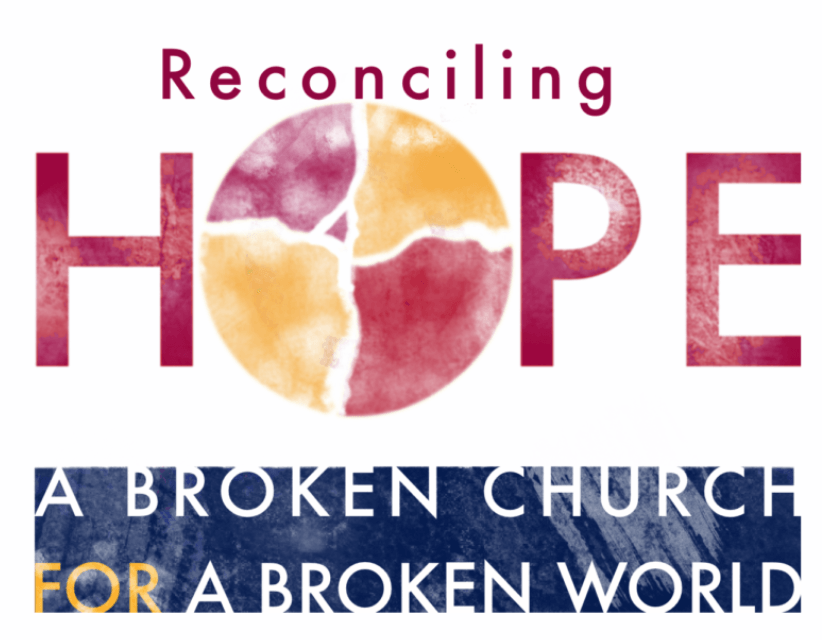
The Churches Together in England Forum, the broadest ecumenical gathering in the country, ended on 16/3/22 with a renewed commitment that the church is ready to serve a ‘broken world’.


More than 300 delegates from CTE’s 52 national Member Churches, Bodies in Association and partner organisations met to discuss the theme ‘Reconciling Hope: A broken church for a broken world’ viewed through the lenses of racial justice and the climate emergency.


Several members of AIF were present, all helping on the AIF stand in the Marketplace.  Paul Docherty, AIF Cahir of Trustees was the,  only one officially representing AIF, all the others came from a range of church delegations and ecumenical roles showing once again the deep commitment to unity found with AIF's membership.


CTE President, the Archbishop of Canterbury, Justin Welby, spoke on reconciliation in a post-Covid world. He urged the church to embrace its diversity and, “where we disagree, we must learn to disagree well…look outwards and respond to the crises that surround us, with the love of God that is within us, and with the unity that can be reached between us.” Tearfund Global Advocacy and Influencing Director, Canon Dr Ruth Valerio, addressed the question of reconciliation with the earth. She said facing the climate emergency is an integral part of the Christian faith: “We need to get hold of God’s love for the world. In Genesis 1:31 ‘God saw all that he had made, and it was very good.’” Professor Anthony Reddie and Rev Dr Tessa Henry-Robinson spoke on reconciling communities. Professor Reddie demanded that the church confront its collusion with the horrors of the transatlantic slave trade. Dr Henry-Robinson challenged individuals to think where they found themselves - as oppressors or following Jesus’s way of justice, hope and peace. Orthodox theologian Dr Ralph Lee reminded delegates that, “as we seek to understand one another better, deep listening helps us overcome the difference in our language and traditions.”


During the gathering the Forum attendees made two statements on Ukraine. The first, calling for the immediate cessation of hostilities and for churches everywhere to campaign for an end to the war in Ukraine. The second, appealing to the UK government to support the churches offering welcome and sanctuary to Ukrainian refugees.


As Forum drew to a close the new General Secretary of Churches Together in England, Bishop Mike Royal, was commissioned into his role. He addressed Forum with his vision for the Church across England: “We’ve got to build a bigger table to gather around and listen to the voices which are often not heard. We need to raise a new generation of ecumenists. And to be ready to respond practically and relevantly to the needs in the world that God has called us as church to serve.”

By Melanie Carroll July 31, 2026
The Association of Interchurch Families (AIF) is seeking to appoint a part-time OPERATIONS MANAGER & CLERK TO THE TRUSTEES * Part-time * 10 hours per week * Home-based * £33,922 FTE (pro rata) * Closing Date: 28 August 2026, 9.00am
By Melanie Carroll July 1, 2026
JUNE — “Sustaining Hope in Uncertainty”
By Melanie Carroll June 9, 2026
JUNE — “Sustaining Hope in Uncertainty”
By Melanie Carroll May 15, 2026
God With Us Between Traditions...
By Melanie Carroll May 1, 2026
Grace in the Ordinary...
By Melanie Carroll March 31, 2026
Walking to the Tomb Together: Holy Week and Easter for Interchurch Families
By Melanie Carroll March 10, 2026
“Reconciliation in Everyday Life”
By Melanie Carroll February 12, 2026
Love that Bridges Difference
By Melanie Carroll January 18, 2026
One Body, One Spirit: What Interchurch Families Reveal About Christian Unity Each January, the Week of Prayer for Christian Unity offers the churches an opportunity to pause and reflect on the unity we confess and the divisions we continue to live with. In 2026, the chosen theme — “There is one body and one Spirit, just as you were called to the one hope of your calling” (Ephesians 4:4) — names something central to the Church’s self-understanding: unity is not an aspiration we invent, but a reality we are called to live into. For the Association of Interchurch Families, this theme is not abstract. It resonates deeply with the ongoing experience of families who belong, worship, and participate across Christian traditions. Interchurch families do not stand outside the Church’s struggle for unity; they are located squarely within it. Unity as a Given, Not a Goal Paul’s words to the Ephesians do not begin with an instruction to create unity. Instead, they speak of unity as something already given: one body, one Spirit, one hope. The task that follows is not construction but faithfulness — learning how to live in a way that honours what is already true in Christ. This distinction matters. Too often, Christian unity is framed as a future achievement, dependent on agreement, negotiation, or institutional convergence. The 2026 theme gently but firmly reframes the conversation. Unity precedes our efforts. It is grounded in God’s action, not ours. Interchurch families instinctively understand this theological ordering. Their shared Christian life does not begin with the resolution of difference, but with the recognition of a faith already held in common. Difference remains real and sometimes difficult, but it is encountered within an existing bond, not outside it. Living with Difference Inside the One Body The image of the Church as one body has often been used to affirm diversity of gifts and functions. What is less frequently explored is what it means to live with diversity that is shaped by distinct ecclesial traditions — different patterns of worship, authority, sacramental understanding, and spiritual language. Interchurch families live with these realities daily. Their experience highlights something important for the wider Church: difference does not automatically fracture unity, but it does require attentiveness, humility, and patience. These are not optional virtues. They are the practical disciplines of belonging to one body. The Week of Prayer for Christian Unity regularly invites churches to pray for deeper mutual understanding. Interchurch families remind us that understanding is not achieved once and for all. It is sustained through listening, mutual respect, and a willingness to remain in relationship even when questions remain unresolved. One Spirit at Work Beyond Boundaries The 2026 theme also directs attention to the work of the Holy Spirit. If there is one Spirit animating the body of Christ, then the Spirit cannot be confined neatly within denominational boundaries. This has implications not only for ecumenical dialogue, but for how churches recognise one another’s faithfulness and fruitfulness. Interchurch families often encounter both hospitality and hesitation within church communities. Their presence can expose unspoken assumptions about belonging: who is fully included, who is seen as peripheral, and whose faith is trusted. The theme of one Spirit challenges churches to look again at how they recognise the Spirit’s work in Christians formed by different traditions. For the Association of Interchurch Families, this is not a theoretical question. It touches pastoral care, sacramental participation, and the formation of children and young people. The lived reality of interchurch families raises questions that cannot be answered solely by policy; they require discernment rooted in the shared work of the Spirit. One Hope, Held Together The final phrase of the theme — one hope of your calling — draws unity beyond the present moment. Christian unity is not sustained by agreement alone, but by a shared orientation towards God’s future. Hope allows Christians to remain connected even when full resolution feels distant. Interchurch families often hold this hope in a particularly grounded way. They live with unresolved tensions not because they minimise them, but because they trust that faithfulness does not require completeness. Their lives suggest that unity can be real, even when it is unfinished. This has something to offer the wider Church during the Week of Prayer for Christian Unity. Rather than viewing difference as a failure to be overcome, interchurch family life points towards unity as something practised patiently, sustained by grace, and entrusted to God’s ongoing work. A Quiet Witness to the Church The Association of Interchurch Families does not claim that interchurch families provide a solution to the Church’s divisions. What they do offer is a witness — often quiet, sometimes costly — to the possibility of remaining faithful to Christ across ecclesial boundaries. The 2026 theme names a truth the Church already confesses. Interchurch families live close to that truth, not by choice or strategy, but through the ordinary realities of shared Christian life. As churches pray together this January, their experience invites a deeper reflection: not only on what unity should look like, but on where it is already being lived. Melanie Carroll - Executive Officer. If you are not already a Member of AIF we invite you to join us at our online Service for the Week of Prayer for Christian Unity as we come together as 'One Body and One Spirit'. Please register below and we will send you out a zoom link to join us.
By Melanie Carroll January 13, 2026
If you are not already a Member of AIF we invite you to join us at our online Service for the Week of Prayer for Christian Unity as we come together as  'One Body and One Spirit'. Please register below and we will send you out a zoom link to join us.