July - Celebrating the Gift or Two Traditions
JUNE — “Sustaining Hope in Uncertainty”
July is a month when many of us naturally slow down.
Children finish their school term, families begin planning holidays, and the rhythm of life shifts slightly. With this gentler pace comes the opportunity to reflect — which we will do at our Annual General Meeting as an Association this month - but here I also want us to reflect on what it means to celebrate the gift of two traditions.
Interchurch families often spend so much time navigating the complexities of belonging to two denominations — calendars, expectations, sacramental norms, pastoral conversations — that the sheer gift of living between traditions can sometimes be overshadowed. July invites us to pause, breathe, and rediscover the joy, the richness, and the unexpected blessings that come with being an interchurch family.
The Gift of Breadth
One of the most powerful gifts of interchurch family life is breadth — the breadth of Christian expression, theology, and spirituality that becomes part of your shared home. Many couples discover early on that their partner’s tradition opens windows they never knew existed. What was once unfamiliar or even puzzling becomes a source of nourishment.
Perhaps one tradition brings a deep sense of sacramentality — sacred rhythms, solemn liturgies, and moments of reverent stillness. Perhaps the other brings passionate preaching, communal prayer, and music that stirs the heart. In many homes, these traditions do not compete; they complement each other, gradually forming a faith life that is wide, resilient, and textured.
Children raised in interchurch families often absorb this breadth with remarkable ease. They learn that there is no single “correct” way to pray, that the Holy Spirit moves in many languages of worship, and that belonging to two churches does not dilute faith — it expands it.
The Gift of Curiosity
Interchurch families cultivate a natural curiosity. They learn to ask questions, to explore beyond the familiar, to approach difference with openness rather than suspicion. This curiosity becomes a spiritual posture — a willingness to be taught by the other, to grow through encounters that stretch us, this is never more so than for those of us that grow up in this reality and truth.
Curiosity fosters humility. It reminds us that no one tradition captures the fullness of God. Each shines a light on different facets of the Gospel. Each carries wisdom, history, pain, and beauty. In interchurch families, curiosity becomes a bridge — a way of honouring both traditions without diminishing either.
And as children grow, this curiosity becomes part of their spiritual DNA. They ask questions adults may avoid. They want to know why churches differ. They notice where the traditions overlap. They notice where they diverge. Their questions pull adults into fresh discovery, and families grow together - and for those children as they grow into adulthood, for many of them that curiosity, DNA, willingness to ask questions and overlap never really changes.
The Gift of Resilience
Celebrating two traditions is not always simple though. It requires resilience — emotional, spiritual, and relational. Interchurch families often discover strength they did not know they possessed: the strength to attend a church where they don’t know the responses; the strength to explain their family - or as an adult child, Individual - choices to others; the strength to navigate pastoral conversations that may be sensitive or difficult.
This resilience is a gift in its own right. It shapes couples into patient listeners. It shapes children into adaptable, empathetic Christians. It shapes families into bridges — real, living bridges — between traditions that too often remain distant.
Resilience doesn’t mean pretending everything is easy. It means continuing to grow, continuing to show up, and continuing to love both traditions even when the path is demanding.
The Gift of Unity Lived in Everyday Life
Perhaps the greatest gift of interchurch family life is the lived experience of unity. Not theoretical unity, not aspirational unity, but unity expressed in real decisions, shared prayers, and everyday life. Interchurch families demonstrate that difference does not have to divide; it can deepen love and expand understanding.
Partners learn to hold their own tradition dearly while honouring the other. Children learn that belonging to Christ is the core of their identity, stronger than denominational boundaries. Families learn that unity is not uniformity but a way of living faithfully with diversity.
This witness is powerful. It is needed. And it is worth celebrating.
A July Invitation
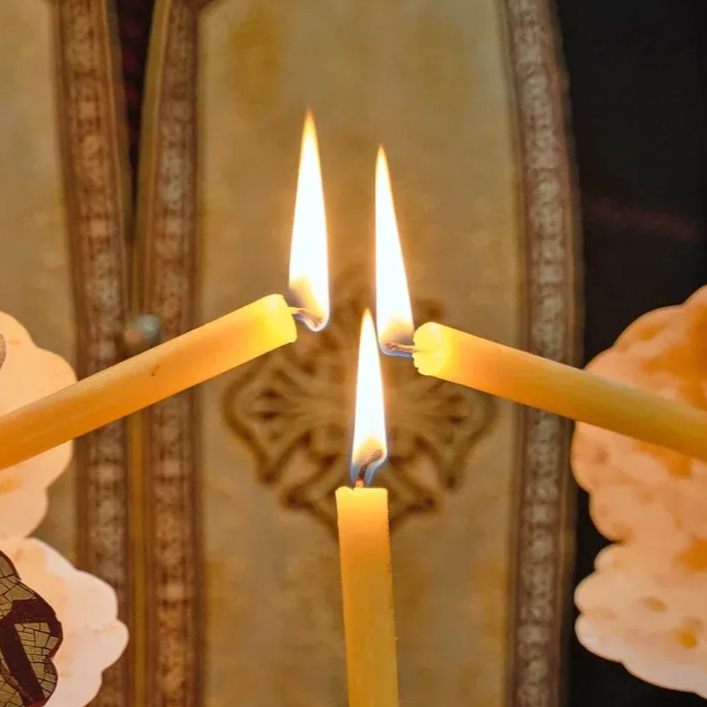
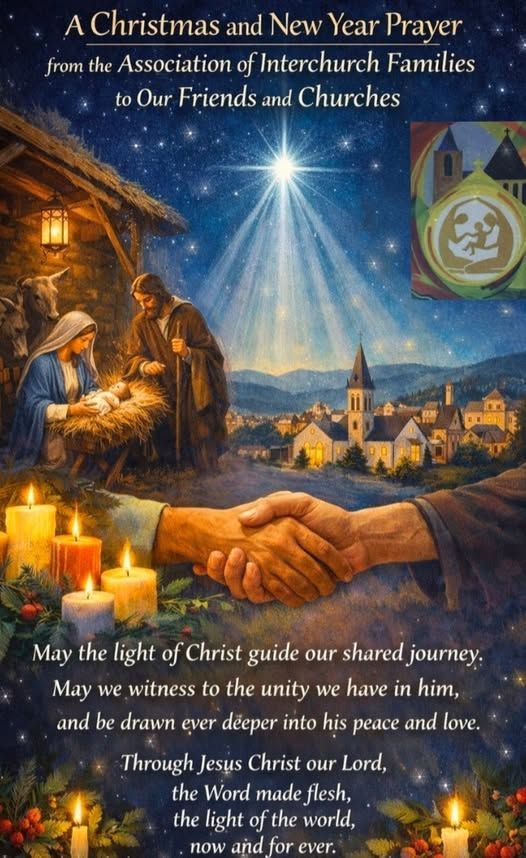
As summer begins, take time to celebrate. Maybe by worshipping in each other’s - or someone else's - church without urgency. Maybe by sharing stories of what you value most in your tradition and what you’ve learned to love in the other’s. Maybe by lighting a candle at home, or just saying a prayer, and giving thanks for the journey that has shaped your family.
Celebrate that you belong to a story bigger than one denomination.
Celebrate that your family life reflects Christ’s own prayer “that they may all be one.”
Celebrate the gift of two traditions — not because the journey is simple, but because it is transformative.
Melanie Carroll - Executive Officer